
Have you recently moved to Germany or are you thinking of doing so? Then we have good news for you! This article is just what you need and will certainly be useful for your life (or future life) in Germany.
1. Sundays in Germany: everything closes and rest is sacred.
Yes, you read that right: in Germany, almost everything is closed on Sundays. Supermarkets, shops and shopping centres don't open, so it's key to organise your shopping during the week or, as a general rule, make the most of Saturday.
It can be awkward at first (especially when you're missing that one ingredient while you're cooking), but you get used to it over time.
Also, if you live in a big city, some shops in train stations are often open and can get you out of a hurry. In addition, sometimes a year there are special Sundays called "Sundays". “shopping Sundays” (Verkaufsoffener Sonntag).
And good news: the bakeries are almost always open, so Sunday bread never fails.
But it's not just a question of timetables: Sunday is a highly respected day of rest. In Germany there is a concept of “Ruhezeit” (quiet time), which means that loud noises are to be avoided. Activities such as drilling, mowing the lawn or playing loud music are not allowed, and neighbours may complain if this is not respected.
Our advice? Use Sunday to relax, go for a walk or meet friends in public spaces. And leave the heavy cleaning or any noisy activity for another day.
2. Hard water and its effects (yes, your hair is going to feel it)
Something that many people don't tell you before you move to Germany is that the water is usually quite hard, i.e. it has a high content of minerals such as calcium and magnesium.
What will you notice? Mainly in your hair and skin. It is very common that, shortly after arriving, your hair will feel drier, coarser or even fall out more than usual. Your skin may also become more sensitive or dry.
Don't worry, you're not the only one: it happens to a lot of people when they arrive.
A simple and quite effective solution is to install a filter in the shower. They are inexpensive, easy to fit and help reduce minerals and other impurities in the water, greatly improving the way your hair and skin feel after bathing.
Our advice: if you start to notice changes, don't panic. Try a shower filter and adapt your routine (better moisturisers, for example). It's a small change that can make a big difference.
3. People are very punctual and take their time seriously. Don't be late!
If you have a meeting at 12:00, make sure you are there at 12:00, or even a few minutes earlier.
In Germany, punctuality is taken very seriously. If you are late, your appointment may be cancelled or the person you were going to meet may simply leave (if they are German).
If you know you are going to be late, it is always polite to call or send a message in advance. Sometimes delays arise, especially if you rely on public transport.
In places like doctors' surgeries or government offices, you will probably miss your appointment. But with friends or in more relaxed situations, people may wait a few minutes.
Keep this in mind when looking for a job: if you have an interview at a specific time, always arrive at least 10 minutes early. In Germany, punctuality is key; being late is frowned upon and could cost you the opportunity.
4. Many things still need to be confirmed by letter
Although Germany is a very modern country and the quality of life is high, the bureaucracy is still quite traditional.
Many services can already be ordered online, but you will still receive many letters by post. Banks, insurance companies and government offices often communicate by post rather than by email.
It may be annoying at first, but you will get used to it.
If you have activated the eID German on your identity card, you can securely access some public services online, which can save you a lot of time. However, not all services are available digitally yet, so it is normal to have to deal with letters from time to time.
5. Always carry some cash with you!
Nowadays, in many countries you can pay everywhere by card, phone or watch. In Germany, however, this is not always the case.
Although the country is very advanced, some places still prefer cash-only payment.
And if you think this won't happen to you because you live in Berlin, let us tell you that yes, it definitely will! In fact, Berlin is famous for having many cash-only places.
We recommend that you always carry a few euros in cash with you just in case.
An example is the clothes markets (Flohmarkt), where cards are rarely accepted. Some sellers may accept PayPal, So if you forget your cash, you can always ask if that option is available.
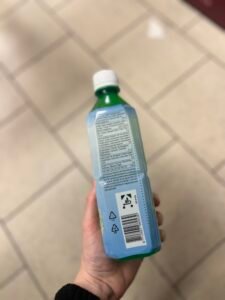
6. Don't throw away your plastic bottles and cans
If you come from a country that does not have the system Pfand, This can be confusing at first.
The Pfand is the German deposit system for bottles and cans. When you buy a drink, you pay an additional deposit (usually between €0.08 if it is a glass bottle and €0.25 if it is a plastic bottle or can). When you return the empty bottle or can in a machine in the supermarket, you get that money back.
This system includes both reusable bottles (Mehrweg) as well as single-use bottles and cans (Einweg) and helps to promote recycling.
You can recognise bottles with a deposit by the symbol Pfand on the label.
If you buy drinks in quantity, Remember that there is also a deposit on the box, usually around €1,50.
You can return bottles and crates in supermarkets using the Pfand (Pfandautomaten). After returning them, the machine gives you a receipt that you can use towards your purchase.
And one more tip: if you're out and about and the supermarket is closed, don't throw your bottles in the bin. Leave them next to the bin, someone will usually pick them up and return them to retrieve the deposit.
7. Recycle, recycle and recycle
Recycling in Germany is a structured and compulsory system.
Household waste is usually separated into several categories:
paper (blue container)
glass
plastic and metal (yellow container)
organic waste (brown container)
non-recyclable waste (black container)
Many apartment buildings have detailed instructions in the corridors explaining how to separate waste correctly.
If you're new to recycling, it's worth reading a quick online guide to understand how the system works. Once you get used to it, it becomes a normal part of everyday life.
We recommend you take a look at this article to make sure you recycle your waste correctly. In many buildings, you will also find information on notice boards in the corridors explaining how to recycle, which is very useful and practical if you have any questions.
8. Make sure you are in the right lane
During our first weeks in Germany, we were shouted at several times, and at first we didn't understand why.
The reason? Cycle lanes.
In Germany, bicycle lanes are taken very seriously. You should not walk on them, stand in them or even cross them without paying attention.
At first we didn't notice the difference between the pavement and the bike lanes, which led to some awkward moments with angry cyclists.
Now we understand why: it can actually be dangerous.
So always make sure you walk in the pedestrian zone and not in the cycle lane.
9. The weather can affect your mood
Summer is probably the happiest time of the year in Germany. You'll notice how people spend a lot more time outdoors, enjoying parks, lakes and the sun.
Unfortunately, summer does not last long.
Autumn and winter can be dark, cold and grey, and many people suffer from the lack of sunlight.
Many migrants say that these months are the most emotionally difficult. If you feel this way, remember: you are not alone.
Adjusting to a new country is already a challenge, and winter can make it even more difficult.
Read more if you need more information on this topic.
10. Communication in Germany can seem very direct. Don't take it too seriously.
Our last point is about communication.
For many newcomers, the German style of communication can seem quite direct. Sometimes it can even sound rude, especially if you are not used to it or if you do not yet speak German well.
If you have just arrived and don't speak the language, it can be intimidating. But don't worry, many Germans speak very good English (and sometimes Spanish too), even if they don't switch languages immediately.
A good strategy is to start the conversation with something like:
Wir sprechen nicht sehr gut Deutsch. Do you speak English? -via shprejen nijt sea gut doitch. shprejen si inglish?
(“We don't speak German very well. Do you speak English?”)
We find that when people see that you are trying to communicate, they usually become much more patient and willing to help.
Moving to Germany can be challenging at first, but once you understand these cultural differences, life becomes much easier, and many people end up loving the structure, security and quality of life that the country offers. We hope you have enjoyed this article and feel a little more prepared for all that awaits you here in Germany.
Other articles that may be of interest to you:
- How to join a German public insurance?-> Learn step by step how to get your krankenkasse and social security number!
- Insurance in Germany, which ones you need and how to choose them -> Find out which insurances are most important in Germany: which are compulsory, which are recommended and how much they cost.
